

Accreditation Justification
Learned Vol. 8, Issue 26
For all that academia has been fundamentally broken, there is value left in the bloated and festering corpse.
Hi. Spooky season imagery, y’all. Come on in.

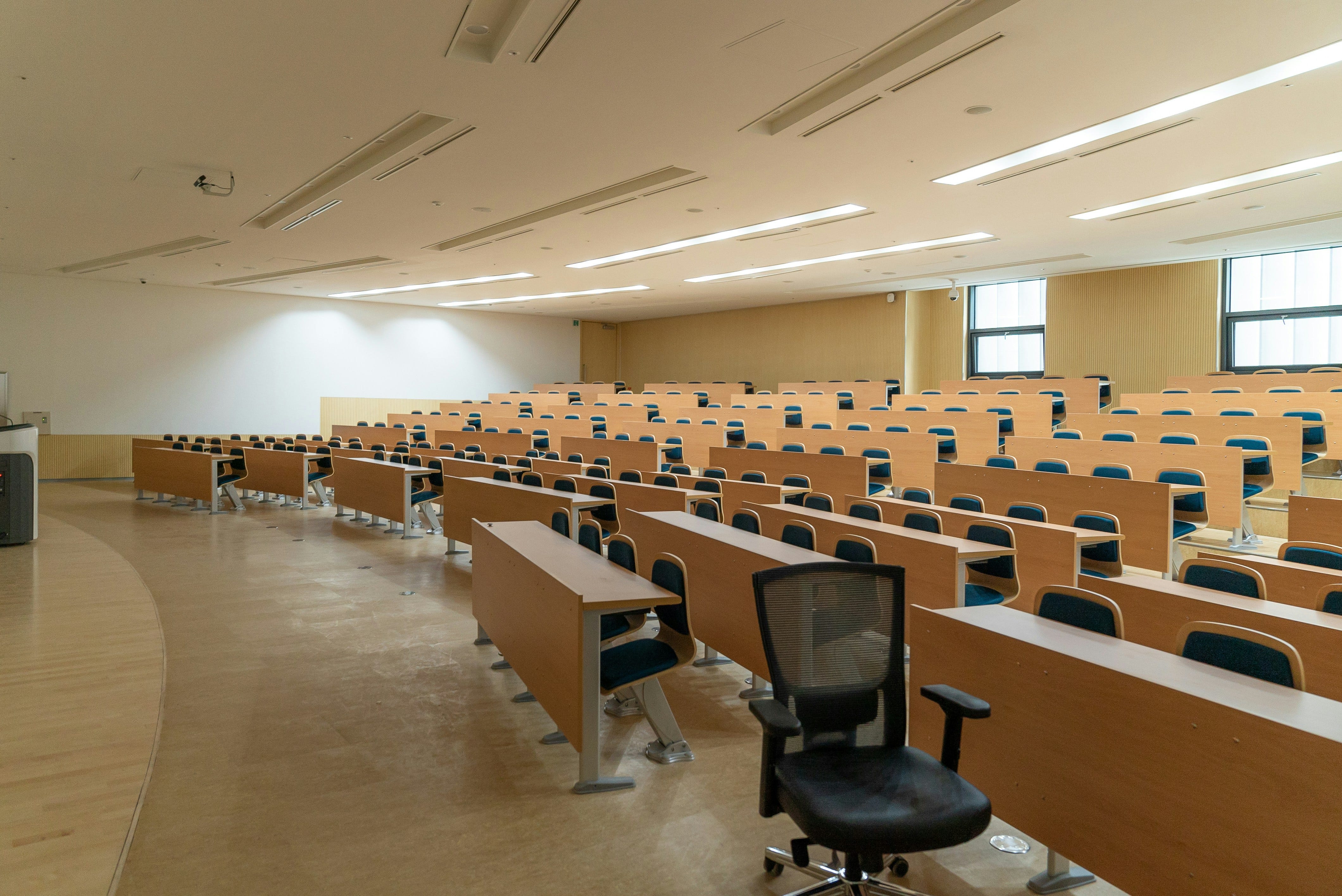
To my mind, the most salvage worthy part of the corpus academia is in the system of oversight and quality control known as accreditation. If you went to a traditional university with a campus and faculty and actual classrooms, chances are good you went to an accredited university, i.e. one that has met specific pedagogical and educational criteria designed to ensure that any student who attends will receive an education equal to the cost of acquiring it.
And, look, the reason I’m honing on this is because accreditation is a very specific word. It literally means to point towards trust. When the word first entered English it was as a verb. You could accredit someone, meaning that you vouched for them. In other words, you could point Tarbelly towards Featherfoot and they would both understand that you were saying that you trust Featherfoot and therefore Tarbelly could also trust Featherfoot.
Now, the internet has brought an entirely new class of learning products to the consumer. Which is…good? You want to study something useful and skills based like Underwater Basket Weaving? There’s a course for that. Something ridiculous like Political Grandstanding for Fun and Profit? Got a course right here.
The point is, it’s easy these days to find online courses for every subject under the sun. But. Verifying that the course was created or sourced by someone who actually knows what they’re talking about is hard. Really, obnoxiously hard.
Take your average gymfluencer1, for example. What proof do you have that they have any idea what the hell they’re talking about? A quick before and after photo splashed on the screen like Photoshop hasn’t been a thing for thirty years.
Ok, maybe influencers are not the same kind of product that universities offer and therefore exempt from the same kind of accreditation demands. But what about the incredible number of commodified lesson systems out there? An influencer buys your time with a promise to help you achieve something: lose weight, get rich, become a playboy. Become Batman. Whatever. Meanwhile a university is promising something else entirely. They’re promising to teach you the skills you need to get a job. To level up your life.
And the key thing here, is that whether the influencer met the obligation of their promise is up to you to decide. Meanwhile, whether a university does is conferred in the status of the degree you earn and what that then says about you. It is entirely external.
Because of this, we’ve created an entire system of oversight, bylaws, and accountability known as accreditation. Social media and its influencers, gurus, and podcast bros…hasn’t. And as long as the promise to change your life for the better stays firmly in the realm of the parasocial, well, such is life. Increasingly though, the social sphere and the online education sphere are intersecting in weird and interesting ways. This is good. The lack of oversight and accountability is not.
I’ve done a bunch of online courses over the years. Call it a hobby, call it a folly, call it Tuesday night, it’s something I enjoy. A lot of the courses I take are not from properly accredited institutions but they kind of borrow that level of trust (credit, anyone?) by associating themselves heavily with universities. These are places like FutureLearn and The Knight Center for Journalism. Their courses are taught by university professors and are promoted as adjacent to standard curricula. They’re not really the problem.
But I’ve also taken a bunch of course from two different, very contrasting sources: Domestika and O’Reilly. The former is all art and soft skills. It’s an educational system in the same vein as Masterclass or Udemy. Anyone can make a class and the only real verification is that you can actually produce what you say you can. In other words, if I make a course promising to teach you how to do Underwater Basket Weaving for fun and profit, I’d better be able to walk you through the weaves.
O’Reilly, on the other hand, started out as a publisher. Back when, if you walked into any sort of tech office, you’d see a pile of books with different animals on the covers on every desk; if you needed some kind of coding knowledge, O’Reilly had a book for it. When the internet started to really go mainstream, O’Reilly decided to create on online school to teach people to learn to code.
The issue with both systems, Domestika and O’Reilly, is that being able to do something doesn’t mean you’ll be able to teach others how to do it. I’ve had some fantastic experiences on Domestika. Funny, articulate, knowledgeable people who have helped me level up my art skills. O’Reilly, on the other hand, well, I have a few certificates from them and I can’t code to save my life.
To me, this shows that in the shift from more formal learning to self-directed, independent, and online learning2, the nature of accreditation and what it means to be a trusted source of pedagogy has to change as well. A lack of accreditation really means a lack of accountability.
And my argument here is that we need a similar sort of system for all the new online learning facilities sprouting up like mushrooms. I know, I know, the last thing any of us needs is more decisions made by committee and haven’t we already seen that accreditation is mostly a scam? Whomever pays the right fees gets accredited? Yeah. Possibly. Doesn’t change the fact that bureaucracy, is a tool and when applied in the right manner, it can protect the individual against the system. In this case, a system that demands oversight and protection against unrealistic expectations and inept pedagogy might go a long way towards turning online education from a half-assed method of maybe learning something, to a real and valuable method of engaging in true learning.
Stay curious,
Joel
Alright, you know we stan a neologism ‘round these parts but holy hell that one hurt to write.
Or, possibly, an even more uncertain future where we ditch all the AI tools and insist on small classrooms with very qualified and well-supported teachers and educational systems but why would we bother? We might actually fix some of our problems and we don’t want that now do we?